Showing posts with label creation. Show all posts

Saturday, January 10, 2026

Disfiguring


Jan 5, 2026, 9:03PM

Ah-Ha! Just when I think I’ve figured it out…Not.

 
                                   yesterday's sunrise, taken with the camera’s “default” setting

Maybe moving into my 80th year I’m finally learning to look through, maybe to revalue the quick take or the disappointment, perhaps to imagine a conception possibly drawn from the other world. The “figured-out” more likely marks the activity of presumption and delusion, but rather than throwing it out, consider it as an opportunity to “disfigure.” The really important things like beauty, truth, love and the other 96 Names for God all surpass human containment. Claiming to grasp them descends into all manner of trouble; yet when problems are recognized and this brings a humbling recognition of human limitation--then  comes the chance of surrender to the beyond. And, by Grace, the Divine just might allow a whiff of the ecstatic.

same image edited to remember and imagine possibility of spring, etc


This venture beyond the bounds of cognition invites the play of imagination, and opens a free space where interpretations guess and dance with uncertainty. The figures that have ruled as unquestioned reality, as absolute right, get unmasked in  “disfiguring.” This term finds provocative elaboration in Mark C. Taylor’s Disfiguring: Art, Architecture, Religion. Taylor explores and richly illustrates with contemporary artists, also connecting with philosophy and theology, as he develops the process of finding sacred ground by breaking idols that block access to creativity and compassion. How can we engage the modern condition without sinking into despair and alienation?

same image edited for black and white setting

“Modernism’s perfection is always a ‘violated perfection’; its purity is impure from the beginning, indeed, before the beginning. Modernity is infected by an other it both refuses and cannot refuse.

One of the figures of this irrefutable other is figuration. Modernism’s disfiguring is not only an aesthetic strategy; it is, as we have seen, a moral crusade. The struggle between figuring and disfiguring is the strife between madness and civilization. Inasmuch as it re-presents sensuousness and irrationality, figuration represents the primitive, infantile, feminine, and mad that modern civilization is constructed to refuse. The refused, however, never goes away. Constituting itself in and through acts of refusal, modernity needs what it nonetheless cannot bear. The refused eternally returns to disrupt and dislocate the structures constructed to control it. 

At its height, modernism’s search for purity is violated by the eruption of surrealism. . . 

The goal of surrealism is to reclaim the rights of the imagination by releasing the strange forces that inhabit the mind. These uncanny powers constitute madness in the midst of civilization and folly at the heart of reason. By soliciting the return of the refused, surrealism attempts to subvert modernism’s repressive puritan ethic. . .

Against modernism’s preoccupation with purity, order, rules, reason, clarity, and function, surrealists set impurity, disorder, transgression, irrationality, and uselessness. Such concerns are hardly reasonable; indeed they are folly—‘les folies les plus vives.’ Forever incomprehensible in any system—be it philosophical, religious, or economic—the folly of surrealism is the ‘non-knowledge’ that Bataille associates with the ecstasy of ‘inner experience.’ If the proposition (non-knowledge lays bare) possesses a sense—appearing, then disappearing immediately thereafter—this is because it has the meaning NON-KNOWLEDGE COMMUNICATES ECSTASY.’ 

(pp. 232-233, 235 in Taylor, quoting Bataille, Inner Experience, p. 52; emphasis in original).

Perhaps reading Taylor has encouraged my play with photo editing and its application to other stuck places in views of life past, present, and future. The snapshot offers a limited perspective dependent on the camera’s default setting and the photographer’s point of view, focus, zoom…so much like the mind’s view that has its own default settings, often unexamined, that control and limit understanding, action, and love for others as well as for self. So let's figure, dis-figure, re-fuse, play on...


Friday, August 22, 2025

The Whole World


Today looking east
In the opening pages of The Blue Sapphire of the Mind: Notes for a Contemplative Ecology, Douglas Christie quotes the source of the title: 
When the mind has put off the old self and shall put on the one born of grace, then it will see its own state in the time of prayer resembling sapphire or the color of heaven; this state scripture calls the place of God that was seen by the elders on Mount Sinai. --Evagrius of Pontus 
This compelling book culminated for me, fittingly, in the closing chapter with its focus on “Practicing Paradise.” The capacity to revision paradise developed through a recurring theme related to the ecstatic, which connects with those special moments in the mystical journey and yet must not be cut off from everyday experience in nature. 
… we come to know ourselves in relation to the living world. Ecstasy begets intimacy, an intimate knowledge that can come to us only through relinquishment of a narrow, bounded self and an openness to an ever-emerging sense of participation in a larger whole. Attention to these moments when such ecstatic expansion occurs can quicken and deepen one’s sensitivity to the world, can open one to the possibility of a continuous exchange, an ever-more encompassing exchange. (p. 235) 
 We must honor and suffer our deep inner truth while also feeling and engaging our interconnectedness with the whole world, with all people and the rest of creation. Thoreau and Merton are frequently referenced for illustration and modeling. Considerable attention is also given to Denise Levertov, Czeslaw Milosz, Simone Weil, and others to show the way while leaving space for the necessary individual design and fit. 
      While the up-side of the path brightens the way, the essential passage through darkness must not be diminished. The next to last chapter “Kenosis: Empty, Emptied” attends significantly to affliction. “Mysticism must rest on crystal-clear honesty, can only come after things have been stripped down to their naked reality” (p. 283, quoting Etty Hillesum). Extending from the work of Simone Weil, Christie asserts “Healing and renewal and hope can issue forth from such contemplative practice; but the practice itself cannot be predicated upon expectation of them. One is called to remain empty, open, alert, always attentive to the presence of the other, particularly the suffering other” (p. 287). 
      With this inclusive acceptance of the whole, both the light and the dark, Paradise shifts to a texture that may be more complex and yet more real, perhaps more accessible. After all, didn’t the Garden of Eden include the serpent as well as the apple, nakedness as well as fig leaves, the self encountering the Other. The closing pages of The Blue Sapphire of the Mind encourage us to constitute a restructuring of paradise that empowers resistance to the destruction of our healthy space for living. 
It seems increasingly clear that we need the language of paradise to help us feel and understand the enormity of what we have lost and what we might yet recover. Which is why the personal accounts of engagement with paradise—lost, broken, renewed—remain so important to the larger work of healing the world (p. 348).
Today looking north

Sunday, December 3, 2023

Presence Alone and With


Dreams often transgress into the past as if a forty-year career hasn’t properly ended, even when final grades were done a half-decade ago. A few days ago, the night’s visitation ghosted students who were more concerned with getting points than with understanding. Will we ever learn?  

    The art of teaching inspires the quest into the inarticulate, not the adulation of dead letters. Love glides above, beyond the best of poems. Modeling has a place but truth lives in continual creation.


     Education, at essence, invites experience of wonder, nurtures longing for not-knowing, frees the drive further into mystery where the personally unique swirls into Union. 
     A trace or savoring of such might be felt as resonance; maybe it’s a subtle tone of love—the sense of entering a harmony, a tension that joys in the fragrance of peace. 
    In this way, my reading has recently delighted in the terrain of Teilhard de Chardin. For example, 


“When he has pursued to the end the vocation contained in all sense-perception—when his eyes have once become accustomed to the Light invisible in which both the periphery of beings and their centre are bathed—then the seer perceives that he is immersed in a universal Milieu, higher than that which contains the restlessness of ordinary, sensibly apprehended, life: a Milieu that knows no change, immune to the surge of superficial vicissitudes—a homogeneous Milieu in which contrasts and differences are toned down. As yet, he can say nothing of this diffuse Reality except that it exists, that it is enveloping and that in a mysterious way it is beatifying. It is enough for him, however, to have glimpsed its serene and luminous folds. Nothing henceforth can shake his determination to move for ever into its embrace and to find his happiness in there becoming ever more lost.” [p. 120, Writings in Time of War]


Monday, November 20, 2023

Softer Love, Subtle Tone


Graying skies with yellow-browned leaves, many down, allow the softer love of shadows, subtle tonalities, layers above common horizons, slowing, looking long, erasing space and time. 


“There is an unbearable and unstoppable energy at the heart of the cosmos that is relentless, despite billions of years of cosmic life. This yearning for wholeness is integral to the unfinished process of evolution because it is an ultimate wholeness that exceeds the human grasp. God is the unbearable wholeness of being, the unrelenting dynamism of love, pushing through the limits of matter to become God at the heart of this evolutionary universe. Divine love evolves the universe as it leans into an unknown future.” Ilia Delio, The Unbearable Wholeness of Being, p. 202. 


Wednesday, November 15, 2023

God/Love: Known Mystery


God has always held as Mystery while Love’s masquerade as sure, known, embraced slips away. Yet change often trues and now the two more converge. Perhaps an evolving consciousness signals as the most reliable marker on the pathway. Reassurance to continue on comes with the edge of knowing and not through the devil-curse of dead-certainty. 

“Evolution is not only the universe coming to be but it is God who is coming to be insofar as God arises with the development of consciousness.” [fn p. 72, Delio, Unbearable Wholeness]

   My current support and guide for this trapeze-trail comes from Ilia Delio’s The Unbearable Wholeness of Being: God, Evolution and the Power of Love. The text distills, interprets, and blends Teilhard de Chardin, Raimon Panikkar, Moltman along with Tillich and  others in exploring this inexplicable wonder. For example:

“God loves the world with the very same love which God is. God is not divine substance governing creation but the radical subject of everything that exists, the depth and wholeness of nature itself that reveals itself in its hiddenness. God’s love fills up each being as ‘this’ (and not ‘that’), but the limits of any being cannot contain God; thus, the excess of God’s love spills over as ‘transcendence,’ more than any being can grasp. Transcendence is the fecundity of love and the ‘yearning’ dimension of everything that exists.” [p. 71]

   While quantum physics quakes the foundations of space/time craved by fundamentalism, the shaky feeling found in venturing into sacred ground, like the sense of “participation mystique,” may be eased. The invitation is to know love that knows and loves beyond the hard boundaries of physical touch and sight.

“The divine mystery is the ultimate AM of everything. God is not the ontologically distinct Being who empowers created beings but the very dimension of created being by which being transcends itself toward greater relationality, wholeness, and depth… God is the unlimited depth of love of all that is, a love that overflows into new life.” (pp. 66-67)


Wednesday, December 14, 2022

Inarticulate Luminous


     Often, if not always, the Path to the Divine appears, at best, only as the body’s weight suspends over the abyss and then, when almost falling, the invisible manifests again, supporting the now-present. A luminous step glimmers, almost immediately disappearing, necessitating moving on. Ibn ‘Arabi, so confusing yet comforting: “Thus it is established that motion belongs to love, for there is no motion in being that is not that of love” (p. 262, Ibn Al-‘Arabi: The Ringstones of Wisdom, Trans. Caner K. Dagli). Courage to continue on, even faced with fear of falling, then may be summoned, founded in the promise of “following the footsteps” of the prophet or priest, Lord of both worlds, even when such tracks shimmer in wonder more than in familiar forms that are touchable with this world’s eyes or fingers.


     The person who moves this way, more likely than not, gets seen as “mad” (Majnun) or love-sick. Indeed, the best hint of being on-track frequently comes in the texture of longing and/or of bewilderment; for the Divine surpasses the human. Direction comes in the tones of love; the way includes going via the imaginal world and seems best expressed in the play of poetry. This almost maddening dynamic is wonderfully explored in Michael Sells’ The Translator of Desires, his translation and commentary on Ibn ‘Arabi’s poetry. The endless pursuit of the beloved offers expression for how

“… the divine persona manifests itself in the polished mirror of the heart. Because God or ‘the Real’ is infinite, beyond space and time, its manifestation in space and time lasts only for a moment. In every new moment the manifestation changes. Whoever attempts to hold onto the image locks himself into the dead husk of that manifestation and precludes himself from receiving new manifestations of the divine. The goal is to let go of the previous image in order to be receptive to the divine appearance the next moment within the polished mirror of the heart.” (p. xxvii)


5:11 AM
5:53 AM


     Like the traveller on the desert sands, endurance includes seeing the oasis dissolve as mirage; still trusting instead the camel’s scent of water. Body leads the mind. Knowing through the polished heart surpasses hard reason. So it is the beloved mediates the inarticulable between: on one side the experience of human love, on the other Divine. The known and the unknowable. 

(A screensaver appeared while drafting this material.)


     Ibn ‘Arabi elaborates on Moses as a guide finding the way. “The station of Moses… could only be possessed by one who had separated realized knowledge from imagination and illusion” (p. 271, Ringstones). In the Preface, Dagli comments on separation but not severance of knowledge from imagination: 

“Indeed, one of the themes of the Fusus is the limitation of the conceptual intelligence in imposing its vision upon the imagination. The former seeks out transcendence and aims to reduce multiplicity to a far-reaching conceptual oneness, whereas the latter perceives and understands the world as a concrete multiplicity of forms and images; it is a vehicle for perceiving the immanence and presence of God. To acknowledge one to the exclusion of the other is to sever man from part of himself.” (p. xi)
      Holding the tension of the unity alongside this multiplicity allows the “one way” to paradoxically coexist with the integrity of unique authentic pathways for each created being. Crucial to this mystery is the capacity to penetrate through to the essence which is the source and life of each moment of creation. 

     The Ringstone of Moses elaborates on this with discussion of Moses’ birth mother as providing the breast milk even after he had been placed in Pharaoh’s household. 

“Then God forbade him to be suckled by any wet nurse, so that he could receive the breast of his mother…It is the same for the Laws’ knowledge. Recall that God has said, For each of you we have appointed a law and a way (Q 5:48), that is, a path. As for ‘way,’ this means that it ‘came from’ that path. These words indicate the principle from whence it came. It is the source of nourishment… the affair is a new creation without repetition. (pp. 258-9, Ringstones).

     Engaging with Ibn ‘Arabi often makes my head swim, but reassurance also comes from his text: 

“Now, guidance is that man should be guided to bewilderment, and know that the affair is bewilderment and that bewilderment is unrest and motion, and that motion is life, without stillness and so without death, and is existence without non-existence.”  In note 14 to this passage, Dagli adds 

“… There is no end to the self-disclosure of God, and no matter how far one journeys through the light the never-ending expressions of the Real will always have the power to maintain the sojourner in his state of lucid drunkenness.” (pp. 256-7, Ringstones)

Thursday, February 3, 2022

Winter Containment


While not a big fan of winter, this season perseveres in proving the value found in stripping down to the basics, the beauty revealed in moving toward the essence. Spiritual teachings stress the hard truth of suffering that is necessary in order to remove the superficial and to recover the True Self; for example, “die before you die,” “to thine own self be true,” and “He who knows himself (or his-self, his soul, his mind) knows his Lord.” The latter phrase is provocatively elaborated in an article by Dom Sylvester Houédard, “Notes on the More Than Human Saying: ‘Unless you know yourself you cannot know God.’” For example, he writes:

“The authentically Semitic act of gnosis (daath, yada ‘to know’) is always the fruitful experience of the one living God as Lord and so as obliging us; e.g. knowledge of God’s goodness to us imposing on us goodness to others. It is the certitude of faith fruitful in deeds; the knowledge that produces likeness and makes us like what we know, that deifies and makes us deiform.”

Houédard also links to the Creation and to “the essence prior to the creating word”:

“Whoever wishes to know the divine breath must first know the cosmos for he who knows himself knows his Lord who is manifest in him. (The ‘distress of the Divine Names at the non-manifestation of their effects’ prior to the creating word of command, is not only why the obligating command is for us to show the effects, but indicates that the divine and uncreated energies are themselves an eternal manifestation of the essence prior to the creating word: the former is developed by Eckhart, the latter by S. Gregory Palamas.)”

         Along these lines, Antonio Machado’s Llamó a mi corazón  has long been a favorite, memorized and often recited in Spanish and with Robert Bly’s English translation. The second end rhyme (viento/quiero) capsulizes the essential quest, the human/divine drama; and the entire poem radiates with images of the True Self. 

Llamó a mi corazón, un claro día,

con un perfume de jazmín, el viento.

 -A cambio de este aroma,

todo el aroma de tus rosas quiero.

Quiero translates as “want, wish, or love”; viento as “wind.” And as the ensuing lines tell, this wind speaks to the soul, calling to account for the tending of the garden: The human accountability for nurturing the divine spark poignantly noted with the longing for the aroma of the roses, the watering of the flowers, and heartbreak over the lost inheritance. As often shown in revelation, this wind carries the holy spirit, the breath of God, the communion to and from the Self.

     Like a compass needle, my directional finder points to “true self,” perhaps always, certainly as years advance. Far back in the beginning, only twenty-seven verses into the Good Book, we’re given our inheritance and destiny: “made in the image of God.” And yet, the currents of life confuse the signal system, or maybe the pathway back home takes threads of many colors, making the unique texture of each creation. 

In any case, the current clue that seems to be key to getting there comes in this teaching: “to know yourself is to know your Lord.” That magnetic pole star has been featured across religions and through varied major writers.

Readings resonate as soul guides, especially ones on gnosis/mysticism, suffering, and wholeness. As the season of winter draws inward, space has opened to engage volumes that previously seemed too demanding: C.G. Jung’s Aion, The Grail Legend by Emma Jung and Marie-Louise von Franz, Barbara Hannah’s Striving Toward Wholeness, and writings by St. John of the Cross, including Edith Stein’s The Science of the Cross.

The swirl, stirring up muddy stuff from the bottom, among readings, dreams, and weather, seems to compose in the effort and evidence of holding together opposites. Barbara Hannah writes:

“In the empirical Self of psychology, light and shadow form a paradoxical unity, but in the orthodox Christian concept the archetype is split into two irreconcilable halves…

This inevitably involves us in a crucifixion of the ego between these two irreconcilable opposites. Of course, there can be no final extinction of the ego, for that would destroy all possibility of consciousness. The ego has to submit, however, to a continual crucifixion between the opposites, to those dreaded conflicts in duty…" (pp. 28-28, Lectures on Jung’s Aion).

Sunday, September 12, 2021

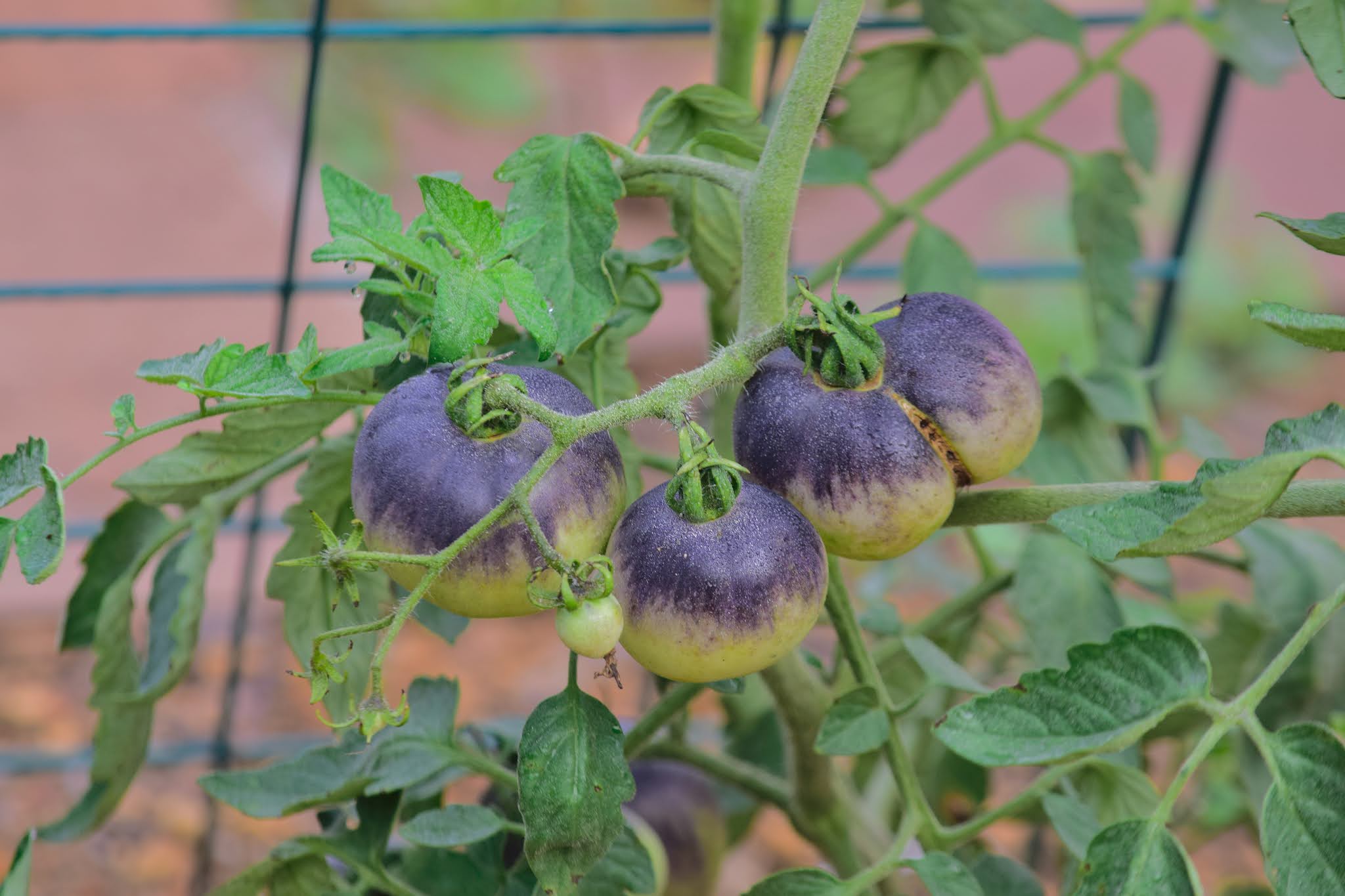
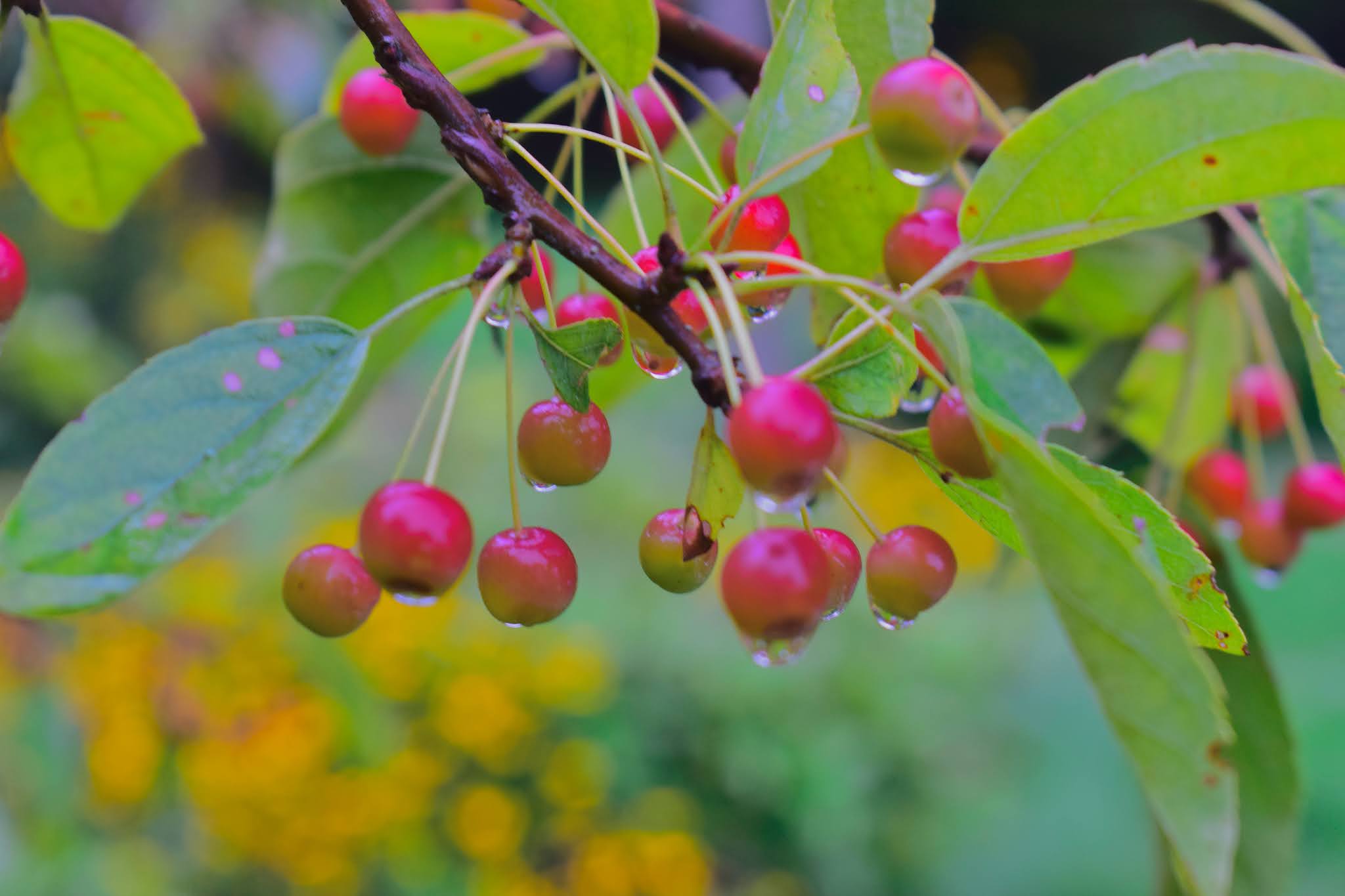
An Early Autumn Sunday: Flowers & Fruits


“Unfallen, intelligible spiritual matter is primordial soul, a proclivity for seeing and contemplation, a potentiality for vision that awaits a sight. Therefore we may even call it ‘darkness,’ for sight is light. It is the darkness of deep potency, not a darkness of privation or lack—a virgin, primal, creative darkness, without memory, desire, or understanding. Filled with sight, however, impressed with her true object, this soul is love—‘the love that is an eye filled with its vision, a seeing that bears its image with it.’ Thus soul—human nature—in its true state is the living, qualitative medium of God’s vision of himself.”   


The Voice of the Eagle (John Scotus Eriugena’s Homily on the Prologue to the Gospel of St. John, Translated with Introduction and Reflections by Christopher Bamford), pp. 257-258.


Quince
Raspberry


Sunday, September 5, 2021

The Transcendent Immanent

Sunday morning. 
Waking to a lovely soft rain, christening newly-opened autumn blooms and ripening berries, all proclaiming “God is Great!”


This wonder-filling mystery exceeds human words but reflection on the Word shimmers forth,


like this passage from Christopher Bamford’s Voice of the Eagle:


“We dare affirm (because it is the truth) that the Creator of the universe himself, in his beautiful and good yearning toward the universe, is through excessing yearning of his Goodness transported outside of himself in his providential activities toward all things that have being, and is touched by the sweet spell of Goodness, Love, and Yearning, and so is drawn from his transcendent throne above all things to dwell within the heart of all things through a substantial and ecstatic power whereby he yet stays within himself…"  
"Therefore, on the one hand they call him the object of Love and Yearning as being beautiful and good and, on the other, they call him Yearning and Love as being a motive power leading all things to himself, who is the only ultimate beautiful and good—Yea, as being his own self-revelation and the bounteous emanation of his own transcendent unity, a motion of yearning, simple, self-moved, self-acting, preexistent in the Good, and overflowing from the Good into creation, and once again returning to the Good.” 
(Christopher Bamford, Voice of the Eagle, pp. 176-177, attributed to Dionysius and in elaboration of commentary on John Scotus Eriugena’s Homily on the Prologue to the Gospel of St. John)


Tuesday, June 1, 2021

Nature’s Path of Beauty

      The Iris Season this year displayed an abundance beyond any we’ve seen in our sixteen years amid these gardens. The fragile blooms lasted long due to unusually gentle breezes instead of occasional strong winds and to a generous space of soft sunlight without heavy rain. Yet after this pleasant interlude, their well-being called for rains and then they came. This life-sustaining gift we welcomed even knowing the blooming side of beauty sooner slips back inside.

      Is it not the very transience that compels us into Presence—shearing us from attachments to a precious side of beauty, a momentary joy, or another attachment? Too easily a manifestation may be frozen into an idol that swears time can be stayed. The false self lies. 


In Raids on the Unspeakable, Thomas Merton contrasts two views of Prometheus leading us to consider our choices of how to live: A) the presumption of the false self that builds up sand-castle idols as if the lies could approach the all-surpassing God or B) ) the surrender before the image of God that’s sowed in one’s heart.

I wonder if contemplating Beauty guides one in becoming able to apprehend beyond the surface, and if this love of the divine form also then aids in discernment of the ugly, of the presumptions, the lies. Might a person thus tell, perhaps by visceral reaction to a countenance that tries to hide lies? Remember the emperor's new clothing made naked to sight untarnished. Truth is evident to clean vision like that of a child, giving discernment not yet compromised by toxic exposures to power, greed, and other distortions that spoil our divine inheritance. 


The Unity that calls to seekers flows in the holy gifts: As when Love comes through into intimate life, like wonderment at the birth of a child, like when Beauty awes us through transcendent lines lifting off iris petals on rays of light, in pearls of raindrop—these moments of being taken into the divine quality. Presence of the One, always here, now. 

The liminal edge shimmers in the prism in the raindrop on the lip of the perfect iris. The numinous shines in the mirror of the heart’s eye reflecting the true self. This grace, this great Compassion feeds the manna of certainty beyond words, known beyond the reach of reason, felt in awe in the wonder of the Presence. It’s sensed in he shimmering passage, the edge of luminosity on the precipice of nothing…


Related readings: 


William Chittick. Self-Disclosure of God . For example, p. 332- on imagination and barzakh.


James Finley. Merton’s Palace of Nowhere. “To use the imagery of Saint John of the Cross, there is a path to walk with ‘no light except the one that burns in your heart’” (p. 12).


Richard Rohr. For example on the Love that removes separation between one person and another as well as from “any other creature.” He continues: “This is something that we can embrace originally at a primal and then deeper levels of consciousness. Children already enjoy this unity at a pre-rational level, and mystics later enjoy it consciously at a trans-rational and universal level.” [ https://cac.org/we-turn-around-one-thing-2021-05-23/ ]