Sunday, September 12, 2021

An Early Autumn Sunday: Flowers & Fruits


“Unfallen, intelligible spiritual matter is primordial soul, a proclivity for seeing and contemplation, a potentiality for vision that awaits a sight. Therefore we may even call it ‘darkness,’ for sight is light. It is the darkness of deep potency, not a darkness of privation or lack—a virgin, primal, creative darkness, without memory, desire, or understanding. Filled with sight, however, impressed with her true object, this soul is love—‘the love that is an eye filled with its vision, a seeing that bears its image with it.’ Thus soul—human nature—in its true state is the living, qualitative medium of God’s vision of himself.”   


The Voice of the Eagle (John Scotus Eriugena’s Homily on the Prologue to the Gospel of St. John, Translated with Introduction and Reflections by Christopher Bamford), pp. 257-258.


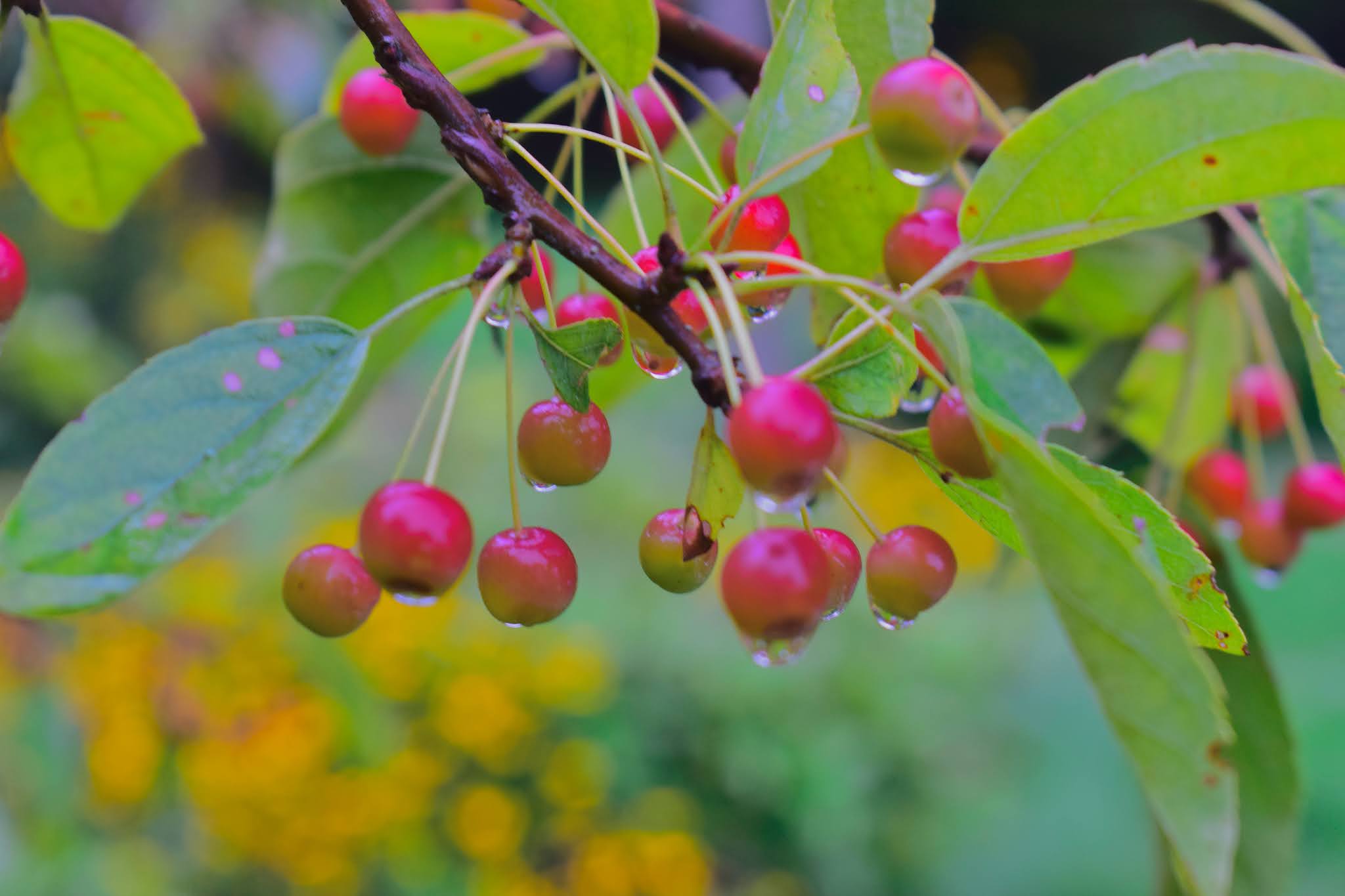
Quince
Raspberry


Sunday, September 5, 2021

The Transcendent Immanent

Sunday morning. 
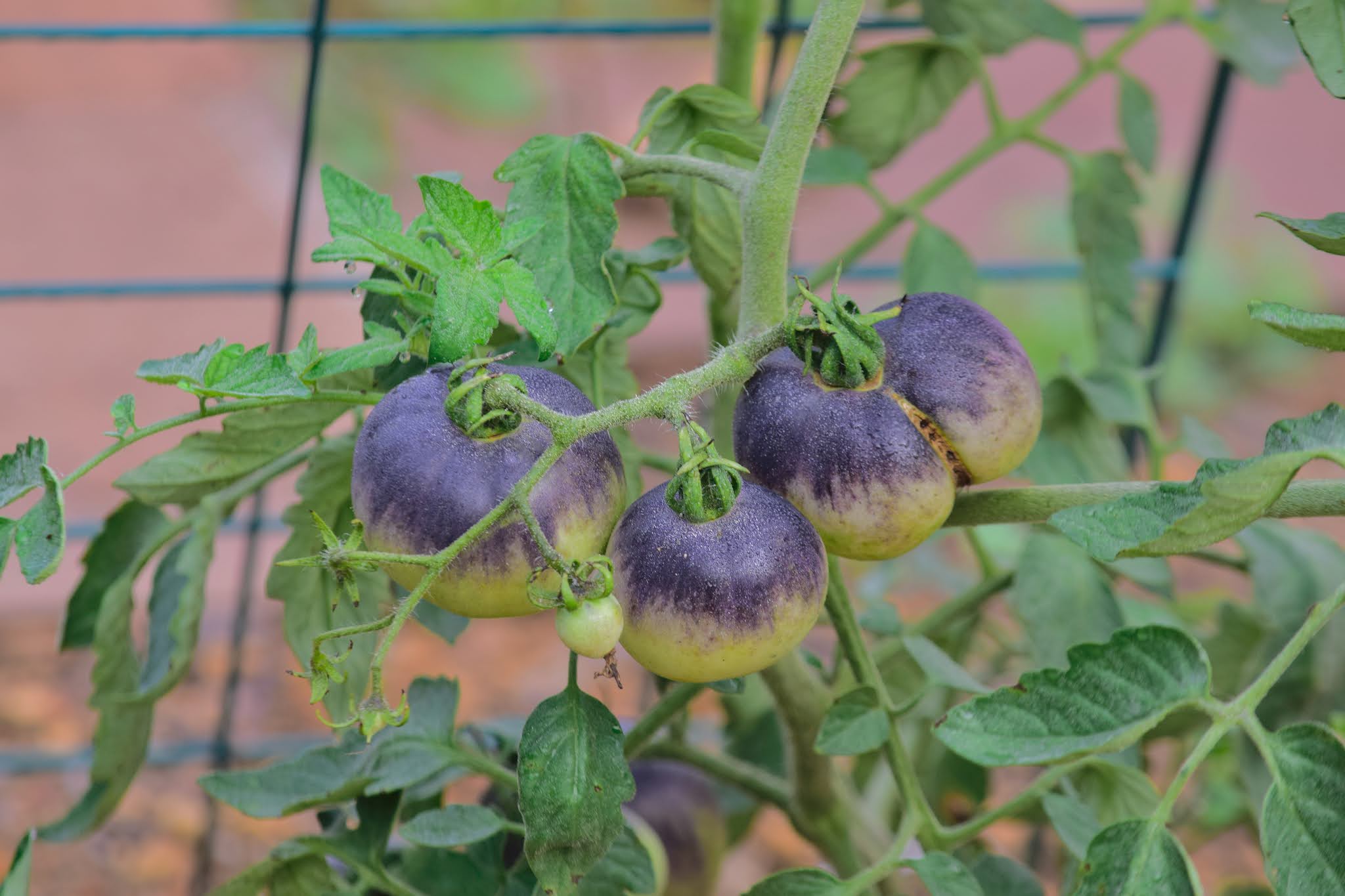
Waking to a lovely soft rain, christening newly-opened autumn blooms and ripening berries, all proclaiming “God is Great!”


This wonder-filling mystery exceeds human words but reflection on the Word shimmers forth,


like this passage from Christopher Bamford’s Voice of the Eagle:


“We dare affirm (because it is the truth) that the Creator of the universe himself, in his beautiful and good yearning toward the universe, is through excessing yearning of his Goodness transported outside of himself in his providential activities toward all things that have being, and is touched by the sweet spell of Goodness, Love, and Yearning, and so is drawn from his transcendent throne above all things to dwell within the heart of all things through a substantial and ecstatic power whereby he yet stays within himself…"  
"Therefore, on the one hand they call him the object of Love and Yearning as being beautiful and good and, on the other, they call him Yearning and Love as being a motive power leading all things to himself, who is the only ultimate beautiful and good—Yea, as being his own self-revelation and the bounteous emanation of his own transcendent unity, a motion of yearning, simple, self-moved, self-acting, preexistent in the Good, and overflowing from the Good into creation, and once again returning to the Good.” 
(Christopher Bamford, Voice of the Eagle, pp. 176-177, attributed to Dionysius and in elaboration of commentary on John Scotus Eriugena’s Homily on the Prologue to the Gospel of St. John)


Tuesday, June 1, 2021

Nature’s Path of Beauty

      The Iris Season this year displayed an abundance beyond any we’ve seen in our sixteen years amid these gardens. The fragile blooms lasted long due to unusually gentle breezes instead of occasional strong winds and to a generous space of soft sunlight without heavy rain. Yet after this pleasant interlude, their well-being called for rains and then they came. This life-sustaining gift we welcomed even knowing the blooming side of beauty sooner slips back inside.

      Is it not the very transience that compels us into Presence—shearing us from attachments to a precious side of beauty, a momentary joy, or another attachment? Too easily a manifestation may be frozen into an idol that swears time can be stayed. The false self lies. 


In Raids on the Unspeakable, Thomas Merton contrasts two views of Prometheus leading us to consider our choices of how to live: A) the presumption of the false self that builds up sand-castle idols as if the lies could approach the all-surpassing God or B) ) the surrender before the image of God that’s sowed in one’s heart.

I wonder if contemplating Beauty guides one in becoming able to apprehend beyond the surface, and if this love of the divine form also then aids in discernment of the ugly, of the presumptions, the lies. Might a person thus tell, perhaps by visceral reaction to a countenance that tries to hide lies? Remember the emperor's new clothing made naked to sight untarnished. Truth is evident to clean vision like that of a child, giving discernment not yet compromised by toxic exposures to power, greed, and other distortions that spoil our divine inheritance. 


The Unity that calls to seekers flows in the holy gifts: As when Love comes through into intimate life, like wonderment at the birth of a child, like when Beauty awes us through transcendent lines lifting off iris petals on rays of light, in pearls of raindrop—these moments of being taken into the divine quality. Presence of the One, always here, now. 

The liminal edge shimmers in the prism in the raindrop on the lip of the perfect iris. The numinous shines in the mirror of the heart’s eye reflecting the true self. This grace, this great Compassion feeds the manna of certainty beyond words, known beyond the reach of reason, felt in awe in the wonder of the Presence. It’s sensed in he shimmering passage, the edge of luminosity on the precipice of nothing…


Related readings: 


William Chittick. Self-Disclosure of God . For example, p. 332- on imagination and barzakh.


James Finley. Merton’s Palace of Nowhere. “To use the imagery of Saint John of the Cross, there is a path to walk with ‘no light except the one that burns in your heart’” (p. 12).


Richard Rohr. For example on the Love that removes separation between one person and another as well as from “any other creature.” He continues: “This is something that we can embrace originally at a primal and then deeper levels of consciousness. Children already enjoy this unity at a pre-rational level, and mystics later enjoy it consciously at a trans-rational and universal level.” [ https://cac.org/we-turn-around-one-thing-2021-05-23/ ]


Saturday, April 24, 2021

This Snowflake Spring

Gift of Spring: This capacity to trust in life's renewal. Spring brings reassurance, perhaps most powerfully, through the defining integrity of the ephemeral. Like when our being thrills with the beauty shown in the litter of spent blooms, when we realize the rebirth that’s carried in pollen dust, carried home in spring’s spiraling winds, the spring-cast seeding soon enough to be washed into our mother earth. Throughout this, this full cycle, we all are held—if we but believe it—by our eternal home, the One.


This unique transcendent snowflake ever kissing, dissolving, transforming on the porous covering of heartbeat.


The “eternal-now” flows in this and every manifestation. It’s especially poignant in light’s fleeting snapshot: this Beauty. Each instance names the Name, variously called by all incarnations of  Presence: Nature, Peace, Joy…the one Love, of Whom we all belong.


It’s in this, in each instance, in the unique transcendent spring-snowflake ever kissing, dissolving, transforming on the porous covering of heartbeat.


The ever-changing appearance of form, the almost illusion of any separation from the Creator, in the resonant “Be!” the Real that’s present in every particle of breath, in every sign throughout creation. This.


This: The curious inhabiting of transient place, limitless space, ambivalent time, inarticulable knowing, the indwelling simultaneously moving here/there.

Gleaning from recent readings: 


In his chapter on T.S. Eliot’s Four Quartets, James Olney hints at opportunity in the potentially disconcerting ephemerality of spring with its push toward the Source that gives the ultimate order:


“…experience per se, at least so far as humans are concerned, until given formal ordering and completion in the art work, until given the satisfaction of a new life in structural design, is void of meaning; and that design or pattern is the thing which, relating part to part and part to whole and implying an end in the beginning and middle, demonstrates significance in otherwise meaningless experience. But pattern is not discovered by us—mere details and parts, after all, of the whole design of life—-within experience. Instead we, insofar as we are artists, create the pattern and impose it on experience. Art formalizes experience; form implies an end and an intention, and so a meaning…” (Metaphors of Self: The Meaning of Autobiography, p. 270) 


Richard Rohr in Hope Against Darkness offers a text of Spring, pointing to its wild exuberance:

“The word enthusiasm (en-theos in Greek) means ‘filled with God.’ I’m not encouraging mindless enthusiasm, but the enthusiasm that is based on intelligence and wisdom and that great gift of hope. Hope is a participation in the very life of God. This hope has nothing to do with circumstances or things going well. It can even thrive in adversity and trial. True faith, which always includes hope and love—is a predisposition to yes.” p. 52


From the concluding lines of al-Baqarah, a foundation for unity, for hope even in the disintegrating swirl of diverse blossoms that appear so fragile, that seem to be fading, losing the effervescence: 

“The Messenger believes in what was sent down to him from his Lord, as do the believers. Each believes in God, His angels, His Books, and His messengers. ‘We make no distinction between any of His messengers.’ And they say, ‘We hear and obey. Thy forgiveness, our Lord! And unto Thee is the journey’s end.’ God tasks no soul beyond its capacity. . .” (The Study Qur’an, Trans. Seyyed Hossein Nasr, Caner K. Dagli, Maria Massi Dakake, Joseph E.B. Lumbard, and Mohammed Rustom;  2: 235-236; pp. 124-125) 

Sunday, February 7, 2021

Thisness. Just Now.


Photo taken Sunday, February 7, 2021

In the next to last page of her next to last chapter in The Body of God: An Ecological Theology, Sallie McFague eloquently synthesizes her work:

“In conclusion, let us briefly recall how each of these forms of the incarnation radicalizes divine immanence and transcendence. We suggested earlier that when we contemplate the wonders of evolutionary history in both its smallest and its greatest dimensions, through a microscope or a telescope, what we grasp is a concrete experience of awesomeness that comes as close as may be humanly possible to experiencing immanental transcendence or transcendent immanence Suddenly to see some aspect of creation naked, as it were, in its elemental beauty, its thereness and suchness, stripped of all conventional categories and names and uses, is an experience of transcendence and immanence inextricably joined. This possibility is before us in each and every piece and part of creation: it is the wonder at the world that young children have and that poets and artists retain It is to experience the ordinary as extraordinary. This is experiencing the world as God’s body, the ordinariness of all bodies contained within and empowered by the divine.” (p. 194)

McFague then opens her final chapter with lines from e.e. cummings including:


how should tasting touching hearing seeing

breathing any—lifted from the no

of all nothing—human merely being

doubt unimaginable You?


(now the ears of my ears awake and

now the eyes of my eyes are opened)


Sunday, January 10, 2021

Path-Maker Breaking Stones

"We make the road by walking," photo, January 9, 2021
The primary offering of a mystical text, in my experience, comes in the uniquely personal breaking open of the divine, often only as an elusive whiff at the edge of the articulate, a breeze that dares one to go beyond frozen thought patterns, to venture past traditions that violate the sanctity of freedom. And almost paradoxically, this freedom conjoins with unity, as Rabindranath Tagore told in his Nobel Prize Acceptance Speech: “We must discover the most profound unity, the spiritual unity between the different races…… He who sees all beings as himself, who realises all beings as himself, knows Truth.” This focuses the heart of Gitanjali, the force that Coleman Barks seeks to liberate and preserve.

        The beckoning pathway forms in glimpsing, in tasting the mystery that remains mysterious while also flavoring the everyday with a texture of life beyond. With this expectation, I looked forward to Fons Vitae’s publication of Coleman Barks’ “translation/version” of Tagore’s Gitanjali (Song Offerings). Having often found support in “making the road by walking” through Barks’ versions of Jalaluddin Rumi (which he fashioned from English translations by Arberry, Nicholson, and others), how would Barks enhance the vitality in Tagore’s own English translation from his native Bengali in the work which led to Tagore’s Nobel Prize award?

        In addition to the 103 songs comprising Gitanjali, Barks includes four additional poems from Tagore’s work, The Crescent Moon, and Barks also gives us a dozen pages of his own commentary and notes. I’d like an additional hundred pages of Barks’ commentary, and still I find that the concentrated material contributes by showing the involvement of W.B. Yates, Ezra Pound, and others as well as pointing to connections with Ghandi and Kabir.

        Barks begins, “Rabindranath Tagore is one of the great universal mystics.” Again, to me, the role of the mystic and thus of mystical text features access to the holy, so that the individual breathes the unique essence that purifies, inspires, and vitalizes, so that he or she moves forward on the pathway “made by walking” (e.g., Antonio Machado, in Campos de Castilla, Proverbios y Cantares, #29) and bridges “these daft twin brothers, life and death” (from Tagore’s #58, p. 76). Barks’ version, just cited, shows the light touch, which serves as a little wake-up invitation, in part through the addition of “daft” to Tagore’s English translation which reads: “the joy that sets the twin brothers, life and death, dancing over the wide world…” (p. 149 in Visva-Bharati/UBS Publication of Gitanjali). Barks also features, in the next line, “the storm” in a way that moves me differently from Tagore’s “tempest.” 

        It’s not that one translation/version is better than the other but that a force may be invoked to join the dance, to broker the mystical encounter. In Gitanjali, Tagore offers a departure from conventional religion. For example, number 11 opens:

“Leave this chanting and singing and telling of beads!

Whom dost thou worship in this lonely dark corner of a temple with all doors shut?

Open thine eyes and see thy God is not before thee!

   He is there where the tiller is tilling the hard ground

and where the path-maker is breaking stones…” 

     (p. 23 in Visva-Bharati/UBS)

Barks’ version goes:

“Give up this fumbling with beads, this chanting 

     in the dark, shut temple.

… A mason

     is breaking and laying stone for a path.”

      In number 102, Tagore, with beautiful respect for the individual’s responsibility and authority for path-making, tells of people who demand “Tell me all your meanings” and he responds, “‘Ah, who knows what they mean!’ They smile and go away in utter scorn./ And you sit there smiling.” (p. 253 in Visva-Bharati/UBS)

Barks’ version of the middle part of #102 offers, “A secret part of you flows out of me.” 

For me, the chance for a bit more of this secret is the offering from the publication of What Wants to Come Through Me Now. 


Saturday, December 5, 2020

Paradox, Certainty, Suffering, and the All-Surpassing Omniscience (That is, Love)

August 24, 2020

     The year 2020 must go down as a great humbler. Perhaps this period of time, if viewed in the long landscape, reveals possibilities, particularly opportunities to inspire radical remakings. Reflecting off the craziness of the current political arena, we might channel this turbulence to transform meanings of crucial standpoints. Could the time be ripe for radical change in the prime movers among the complex of Power to Love? How might we engage creative chaos? What if we’ve been tangled in the old, old but failed, mythos of the hero? And what if this heroic sense of self (which necessarily generates blame as well as hubris) is incommensurate with our divine guidance? Can we risk surrender to the divine? How can a person let go of the struggle without falling into darkness?


     Perhaps the sense of what to do and what not to do requires a revolution in the feeling of certainty. The Good Books tell us that Knowing belongs to the Omniscient and thus reaches beyond our cognitive grasp (cf. Philippians 4:7, Peace surpasses understanding; Ephesians 3:19, Love surpasses knowledge). So why be surprised when the best we can reach of certainty comes in a sacred texture of bewilderment, being awed, surrendered.* 

The mark that someone knows that the Real’s knowledge encompasses his acts, states, and words is that quaking and dread becomes his watchword, and awe holds up the banner of rulership from his head to his toes. . . Adam was biting the fingers of wonder with the teeth of bewilderment: ‘What’s this? What happened?’” (William Chittick translating Sam’ani, The Repose of the Spirits, pp. 90,103 on al-‘Alim: the Knower)

October 8, 2020


Teachings of Sufism often return into the theme of mystical annihilation (fana) as one approaches the One (see, for example, Stoddard, Sufism, p. 64; Lings, What is Sufism? p. 78; Ernst, Shambhala Guide to Sufism, pp. 61, 115). An outgrown, dysfunctional sense of knowing needs release in order to birth wonder. Why bother about a feeling of ineptitude if we are swept into the ocean? 

      Richard Rohr’s meditation this week comforts me in the reminder that being heroic (my term, not his) is not the only way of acting responsibly in the presence of suffering. He uses the metaphor of a swollen river, sweeping folks off into its flow. The responsible action to today’s crisis comes not just in heroic activism that works toward systemic reform, but also and equally valuable are works of education/healing and those of hands-on help for persons in distress. In Mark Wallace’s writings, the caring attention extends to all of creation, trees to butterflies. 

“As the breath of God who animates all life, the Spirit becomes present in the spaces opened up between persons who risk themselves for the other. . . The Spirit is not a static entity but a potential modality of divine presence that becomes actual in the co-partnerships of persons with one another and other life forms” (pp. 10-11, Fragments of the Spirit: Nature, Violence, and the Renewal of Creation).

August 1, 2020


     Even so and always, the work zone flows from the interior and, of course, the Source. Blame and anger transform into constructive fire for healing and loving. The only effective agent, God.


*Previous blogs elaborating the theme of Bewilderment include:

August 18, 2019 When Bewilderment Tracks the Mystery

May 13, 2020 Recognition on the Pathway

September 7, 2018 Living with Bewilderment

August 24, 2019 Bewildered by God

November 16, 2019 Longing into Certainty

March 23, 2019 Rumi, Radical Love, & I/You (part A) 

August 18, 2018 Transcendent Power

February 10, 2018 Tracking on the Path of Attraction

December 16, 2017 “and He is with you”

November 14, 2017 Sure Good?