Tuesday, April 19, 2022

Presence Here and Now


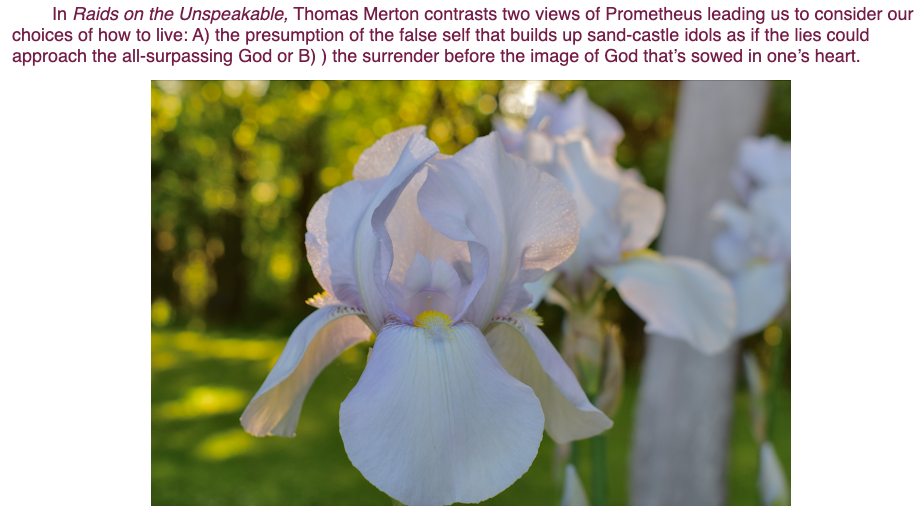
April 18, 2022: the most photo-compelling day of all—at least in these parts, at least in recent memory… a day not even necessary to leave the comfort of the house in order to frame the visions of beauty. 


Perhaps this date gifted a reminder of the guidance: “Be here now!”  While travel to the exotic

Oct 28, 2018


may expand horizons and spark imagination;

True Signs Apr 28, 2018


a vital window to the spiritual life comes home in being present to each individual’s gift from the Divine, the True Self. 

     Absorbed In yesterday’s amazing display, my being thrilled in the awesome manifestation of the images containing wholeness:  light and dark,


lime-green spring holding bleak winter—a holy embrace.


Often beauty takes breath away with rainbow-hued dusk 


Winter Containment


in morning-lit webs of life

Now we see Dimly


in the contours tracing the pathways we travel; 


Contours. Jun 1, 2021


and yet, perhaps more importantly, holding steady in the present sometimes sends revelations through the worn boards of the barn, and


and like the grace of aging well, in the lichen-covered, decaying, no-longer functional, or then 

Certainty


from an always-open doorway.


And Beauty is but one of the names of God. The Presence manifests in Long-Suffering (cf Ann Bedford Ulanov, The Wizard’s Gate), 


in giving to the struggle for Justice, and, of course, through longing further in the almost unendurable, soul-stretching hands of Love.


“Jesus said: I am the light above everything.

I am everything.

Everything came forth from me,

and everything reached me.

Split wood, I am there.

Life up a rock, you will find me there.”


[Gospel of Thomas 77. Cited in:

Perennial Wisdom for the Spiritually Independent, p. 45]


Wednesday, February 9, 2022

Light and Shadow in Late Winter

The play of light hints across remnants of the last snowfall and flows on into the woodland with its still-clinging autumn leaves that this early morning call glowing in dawn’s promise, as if all this transmits a stay/leave tease in and out of hibernation’s haunt. 


Today’s social media (also flickering pre-dawn) featured a post by David Whyte on Love, a word ever transforming, calling "come in--if you dare..." Remember its falling-in and falling-out, the cross between the known and the further on. From Consolations, Whyte offers this:


Thursday, February 3, 2022

Winter Containment


While not a big fan of winter, this season perseveres in proving the value found in stripping down to the basics, the beauty revealed in moving toward the essence. Spiritual teachings stress the hard truth of suffering that is necessary in order to remove the superficial and to recover the True Self; for example, “die before you die,” “to thine own self be true,” and “He who knows himself (or his-self, his soul, his mind) knows his Lord.” The latter phrase is provocatively elaborated in an article by Dom Sylvester Houédard, “Notes on the More Than Human Saying: ‘Unless you know yourself you cannot know God.’” For example, he writes:

“The authentically Semitic act of gnosis (daath, yada ‘to know’) is always the fruitful experience of the one living God as Lord and so as obliging us; e.g. knowledge of God’s goodness to us imposing on us goodness to others. It is the certitude of faith fruitful in deeds; the knowledge that produces likeness and makes us like what we know, that deifies and makes us deiform.”

Houédard also links to the Creation and to “the essence prior to the creating word”:

“Whoever wishes to know the divine breath must first know the cosmos for he who knows himself knows his Lord who is manifest in him. (The ‘distress of the Divine Names at the non-manifestation of their effects’ prior to the creating word of command, is not only why the obligating command is for us to show the effects, but indicates that the divine and uncreated energies are themselves an eternal manifestation of the essence prior to the creating word: the former is developed by Eckhart, the latter by S. Gregory Palamas.)”

         Along these lines, Antonio Machado’s Llamó a mi corazón  has long been a favorite, memorized and often recited in Spanish and with Robert Bly’s English translation. The second end rhyme (viento/quiero) capsulizes the essential quest, the human/divine drama; and the entire poem radiates with images of the True Self. 

Llamó a mi corazón, un claro día,

con un perfume de jazmín, el viento.

 -A cambio de este aroma,

todo el aroma de tus rosas quiero.

Quiero translates as “want, wish, or love”; viento as “wind.” And as the ensuing lines tell, this wind speaks to the soul, calling to account for the tending of the garden: The human accountability for nurturing the divine spark poignantly noted with the longing for the aroma of the roses, the watering of the flowers, and heartbreak over the lost inheritance. As often shown in revelation, this wind carries the holy spirit, the breath of God, the communion to and from the Self.

     Like a compass needle, my directional finder points to “true self,” perhaps always, certainly as years advance. Far back in the beginning, only twenty-seven verses into the Good Book, we’re given our inheritance and destiny: “made in the image of God.” And yet, the currents of life confuse the signal system, or maybe the pathway back home takes threads of many colors, making the unique texture of each creation. 

In any case, the current clue that seems to be key to getting there comes in this teaching: “to know yourself is to know your Lord.” That magnetic pole star has been featured across religions and through varied major writers.

Readings resonate as soul guides, especially ones on gnosis/mysticism, suffering, and wholeness. As the season of winter draws inward, space has opened to engage volumes that previously seemed too demanding: C.G. Jung’s Aion, The Grail Legend by Emma Jung and Marie-Louise von Franz, Barbara Hannah’s Striving Toward Wholeness, and writings by St. John of the Cross, including Edith Stein’s The Science of the Cross.

The swirl, stirring up muddy stuff from the bottom, among readings, dreams, and weather, seems to compose in the effort and evidence of holding together opposites. Barbara Hannah writes:

“In the empirical Self of psychology, light and shadow form a paradoxical unity, but in the orthodox Christian concept the archetype is split into two irreconcilable halves…

This inevitably involves us in a crucifixion of the ego between these two irreconcilable opposites. Of course, there can be no final extinction of the ego, for that would destroy all possibility of consciousness. The ego has to submit, however, to a continual crucifixion between the opposites, to those dreaded conflicts in duty…" (pp. 28-28, Lectures on Jung’s Aion).

Sunday, October 10, 2021

To Claim Certainty from Beauty


The invitation offered through these autumn leaves connects with continued reading in Evelyn Underhill’s Mysticism: The Development of Humankind’s Spiritual ConsciousnessUnderhill builds our capacity to challenge the way our access to the divine has been blocked by the misrepresentation of mysticism as duplicitous magic. Do we forfeit our treasure by distrusting the mystic? Why should we accept the lie that God’s presence is limited only to the extreme ascetic? Why allow ourselves to cut ourselves off from God’s Love by filling our hearts with shallow stuff? For example, Underhill says, 

“In the symbolic form there is no mental deception: the self is aware that it is being shown truth ‘under an image.’ . . .  In such a vision as this, we see the mystic’s passion for the Absolute, his intuition of Its presence in his soul, combining with material supplied by a poetic imagination, and expressing itself in an allegorical form. It is really a visualized poem, inspired by a direct contact with truth (pp. 285-286).


Yes, in order to share the mystic treasure, we have to be able to work symbolically, but that is our human birthright. We’re much given to using words, to taking pictures, to doing art in many forms. We just have to go a bit further because it is easy to get caught on the surface, easier to resist paradox, easiest to prefer quick solutions rather than plumbing multiple translations/representations until the resonance of truth calls us home. But it’s in this mystic-like work and play that seeks truth where we find joy and peace. They’re calling from just a dimension further into the beauty, the love, the justice that our fingertips are almost touching and that our hearts are being touched by almost every day. This is the mystic pathway. 
Imaginary vision of this kind is probably far more common than is generally supposed: and can exist without any disturbance of that balance of faculties which is usually recognized as “sane.” “If,” says Pratt, “there be any truth in Freud’s insistence upon the symbolic nature of normal dreams, it is the less surprising that the dream imagination of the Christian mystic should work up visions of a symbolic sort. . . . Our modern tendency to consider visions quite extraordinary and pathological is probably mistaken.” [Underhill, p. 288, quoting from Pratt’s The Religious Consciousness, p. 404]

The pathway depends on choosing Reality instead of “reality.” The trail is marked by appreciation for beauty when the fakes are discarded, by the taste of joy when thrill seeking’s abandoned, when true love gets valued above the cheap substitutes. It’s seeing beyond the surface as Underwood explains “the whole philosophy of vision”:

It is an accommodation of the supra-sensible to our human disabilities, a symbolic reconstruction of reality on levels accessible to sense. This symbolic reconstruction is seen as a profoundly significant, vivid, and dramatic dream: and since this dream conveys transcendental truth, and initiates the visionary into the atmosphere of the Eternal, it may well claim precedence over that prosaic and perpetual vision which we call the “real world.” . . . In these words she [Mechthild of Hackborn] understood how Love had subjected to herself the Omnipotent Majesty of God, had inebriated His Unsearchable Wisdom, had drawn forth all His most sweet goodness; and, by wholly conquering His divine justice and changing it into gentleness and mercy, had moved the Lord of all Majesty. (pp. 287-8). 


Thursday, September 30, 2021

Now we see dimly


early morning, September 30

This morning fog in concert with dawn light and deciduous woodland serve as reminder of how/when/why we see dimly, summoning lines from the chapter on Love: “For now we see in a mirror dimly” (1Cor 13:12). And, as the word selection points out, sight into the divine remains a puzzle: we see enigmatically. Ellicott’s Commentary for English Readers elaborates on the passage from Corinthians: 

Through a glass, darkly.--Better, through a mirror in a dark saying. The illustration here is from a mirror when the image appears far behind the mirror itself. If we remember the imperfect metal surfaces which formed the mirrors of those days, we can imagine how imperfect and enigmatical (the Greek word is "in an enigma") would the image appear; so that the Apostle says, "Like that image which you see when you look at an object in a mirror far off, with blurred and undefined outline, such is our knowledge here and now; but then (i.e., when this dispensation is at an end) we shall see as you see a man when you stand before him face to face.”

And yet even in the dim and puzzling view, how powerfully may we be touched, moved by Beauty.


The foggy puzzle also pushes us to humility, to acknowledge our limitation, and like Job (as representative of all mystics) to confess: “indeed, God is great—beyond our knowledge” (Job 36:26). To
see as mystics see, we sacrifice the presumption that our minds capture Reality and surrender to the gift of Beauty, imprecise as it may appear, insecure as we may feel.  

view through window screen, Sept 29
Evelyn Underhill elaborates so articulately:

 “They [mystics] have never been deceived by phenomena, nor by the careful logic of the industrious intellect. One after another, with extraordinary unanimity, they have rejected that appeal to the unreal world of appearance which is the standard of sensible men: affirming that there is another way, another secret, by which the conscious self may reach the actuality which it seeks. More complete in their grasp of experience than the votaries of intellect or of sense, they accept as central for life those spiritual messages which are mediated by religion, by beauty, and by pain. . .

We must perceive in it, as some mystics have done, “the beating of the Heart of God”; and agree with Heracleitus that “there is but one wisdom, to understand the knowledge by which all things are steered through the All.” Union with reality—apprehension of it—will upon this hypothesis be union with life at its most intense point: in its most dynamic aspect. . .

The Indian mystics declare substantially the same truth when they say that the illusion of finitude is only to be escaped by relapsing into the substantial and universal life, abolishing individuality. So too, by a deliberate self-abandonment to that which Plato calls the “saving madness” of ecstasy, did the initiates of Dionysus “draw near to God.” So their Christian cousins assert that “self-surrender” is the only way: that they must die to live, must lose to find: that knowing implies being: that the method and secret which they have always practiced consists merely in a meek and loving union—the synthesis of passion and self-sacrifice—with that divine and unseparated life, that larger consciousness in which the soul is grounded, and which they hold to be an aspect of the life of God. In their hours of contemplation, they deliberately empty themselves of the false images of the intellect, neglect the cinematograph of sense. Then only are they capable of transcending the merely intellectual levels of consciousness, and perceiving that Reality which “hath no image.” (Mysticism: The Development of Humankind’s Spiritual Consciousness, pp. 23, 30, 31-32)


To move closer to the Divine, we must search out a view of beauty like that of a dew-dampened web, like the love that links us in relationships with all others, all of nature, all humankind, and beyond.


Underhill again:

“Pilgrimage to the place of the wise,” said Jalalu ‘ddin, “is to find escape from the flame of separation.” It is the mystics’ secret in a nutshell. “When I stand empty in God’s will and empty of God’s will and of all His works and of God Himself,” cries Eckhart with his usual violence of language, “then am I above all creatures and am neither God nor creature, but I am what I was and evermore shall be.” He attains, that is to say, by this escape from a narrow selfhood, not to identity with God—that were only conceivable upon a basis of pantheism—but to an identity with his own substantial life, and through it with the life of a real and living universe; in symbolic language, with “the thought of the Divine Mind” whereby union with that Mind in the essence or ground of the soul becomes possible. The first great message of Vitalistic philosophy is then seen to be—Cease to identify your intellect and your self: a primary lesson which none who purpose the study of mysticism may neglect. Become at least aware of, if you cannot “know,” the larger, truer self: that root and depth of spirit, as St. François de Sales calls it, from which intellect and feeling grow as fingers from the palm of the hand—that free creative self which constitutes your true life, as distinguished from the scrap of consciousness which is its servant (Mysticism, p. 32).


Sunday, September 12, 2021

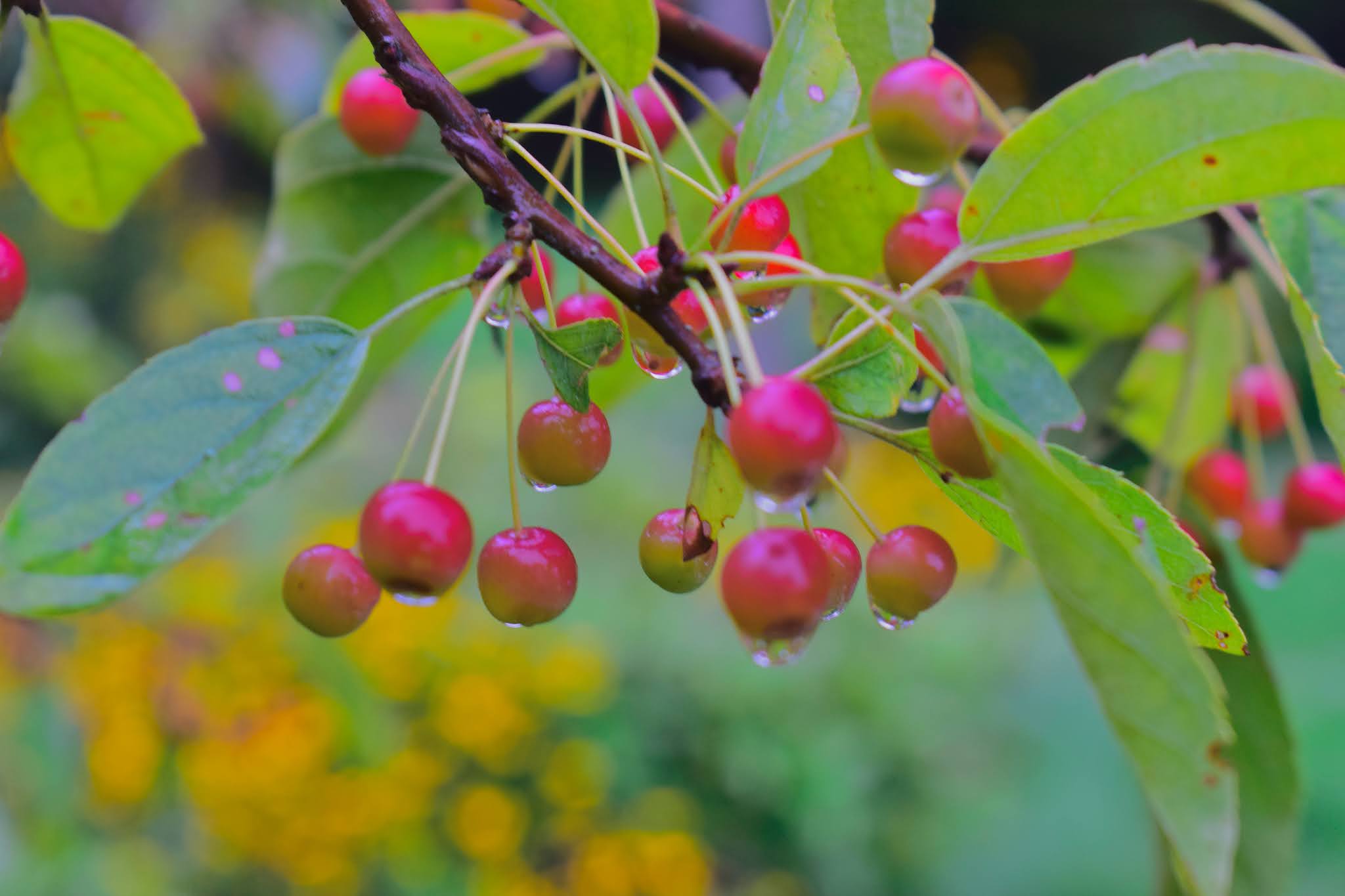
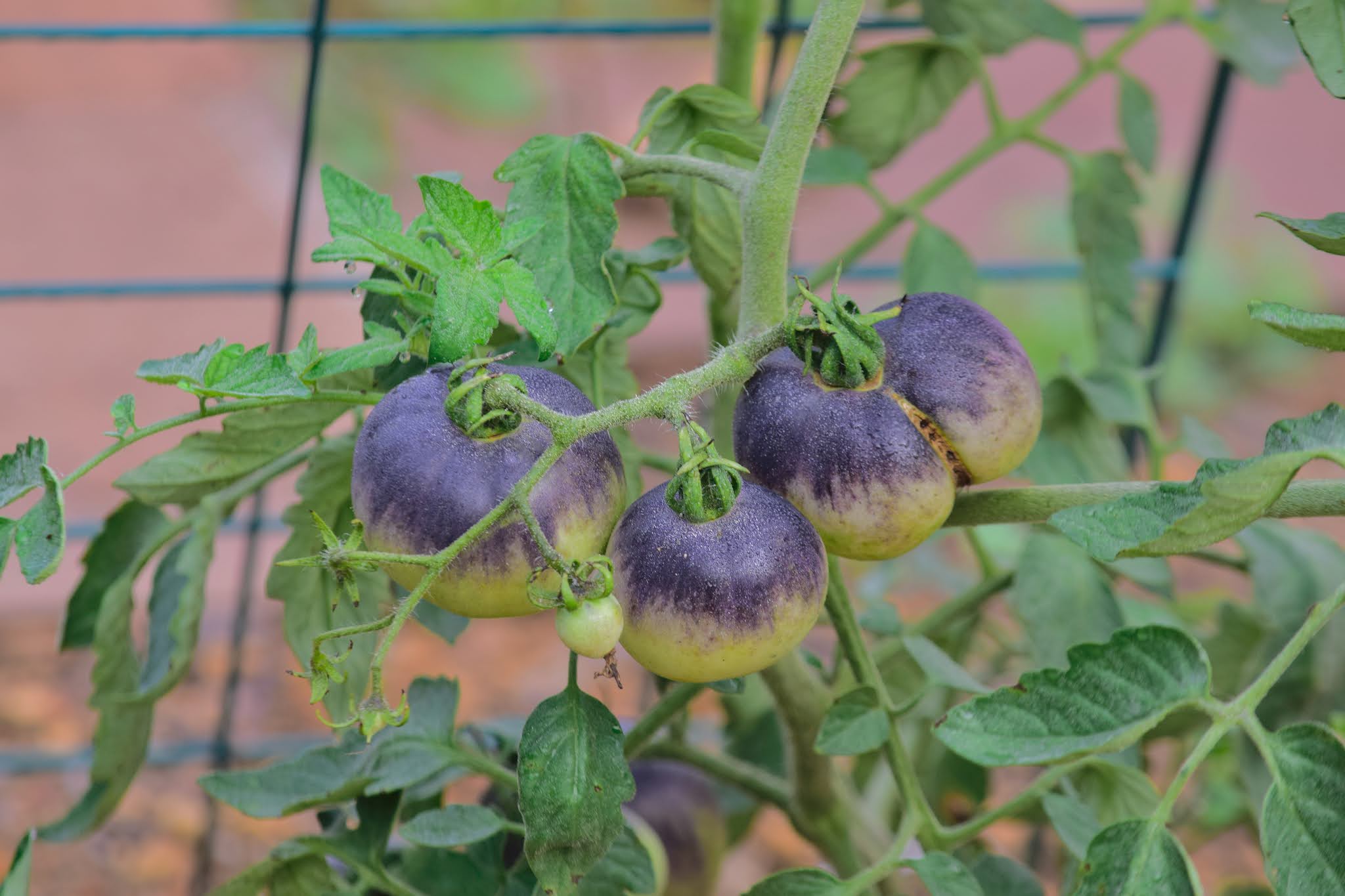
An Early Autumn Sunday: Flowers & Fruits


“Unfallen, intelligible spiritual matter is primordial soul, a proclivity for seeing and contemplation, a potentiality for vision that awaits a sight. Therefore we may even call it ‘darkness,’ for sight is light. It is the darkness of deep potency, not a darkness of privation or lack—a virgin, primal, creative darkness, without memory, desire, or understanding. Filled with sight, however, impressed with her true object, this soul is love—‘the love that is an eye filled with its vision, a seeing that bears its image with it.’ Thus soul—human nature—in its true state is the living, qualitative medium of God’s vision of himself.”   


The Voice of the Eagle (John Scotus Eriugena’s Homily on the Prologue to the Gospel of St. John, Translated with Introduction and Reflections by Christopher Bamford), pp. 257-258.


Quince
Raspberry


Sunday, September 5, 2021

The Transcendent Immanent

Sunday morning. 
Waking to a lovely soft rain, christening newly-opened autumn blooms and ripening berries, all proclaiming “God is Great!”


This wonder-filling mystery exceeds human words but reflection on the Word shimmers forth,


like this passage from Christopher Bamford’s Voice of the Eagle:


“We dare affirm (because it is the truth) that the Creator of the universe himself, in his beautiful and good yearning toward the universe, is through excessing yearning of his Goodness transported outside of himself in his providential activities toward all things that have being, and is touched by the sweet spell of Goodness, Love, and Yearning, and so is drawn from his transcendent throne above all things to dwell within the heart of all things through a substantial and ecstatic power whereby he yet stays within himself…"  
"Therefore, on the one hand they call him the object of Love and Yearning as being beautiful and good and, on the other, they call him Yearning and Love as being a motive power leading all things to himself, who is the only ultimate beautiful and good—Yea, as being his own self-revelation and the bounteous emanation of his own transcendent unity, a motion of yearning, simple, self-moved, self-acting, preexistent in the Good, and overflowing from the Good into creation, and once again returning to the Good.” 
(Christopher Bamford, Voice of the Eagle, pp. 176-177, attributed to Dionysius and in elaboration of commentary on John Scotus Eriugena’s Homily on the Prologue to the Gospel of St. John)