Wednesday, March 18, 2020

“And now

for other news…” 

Wednesday, March 18. 

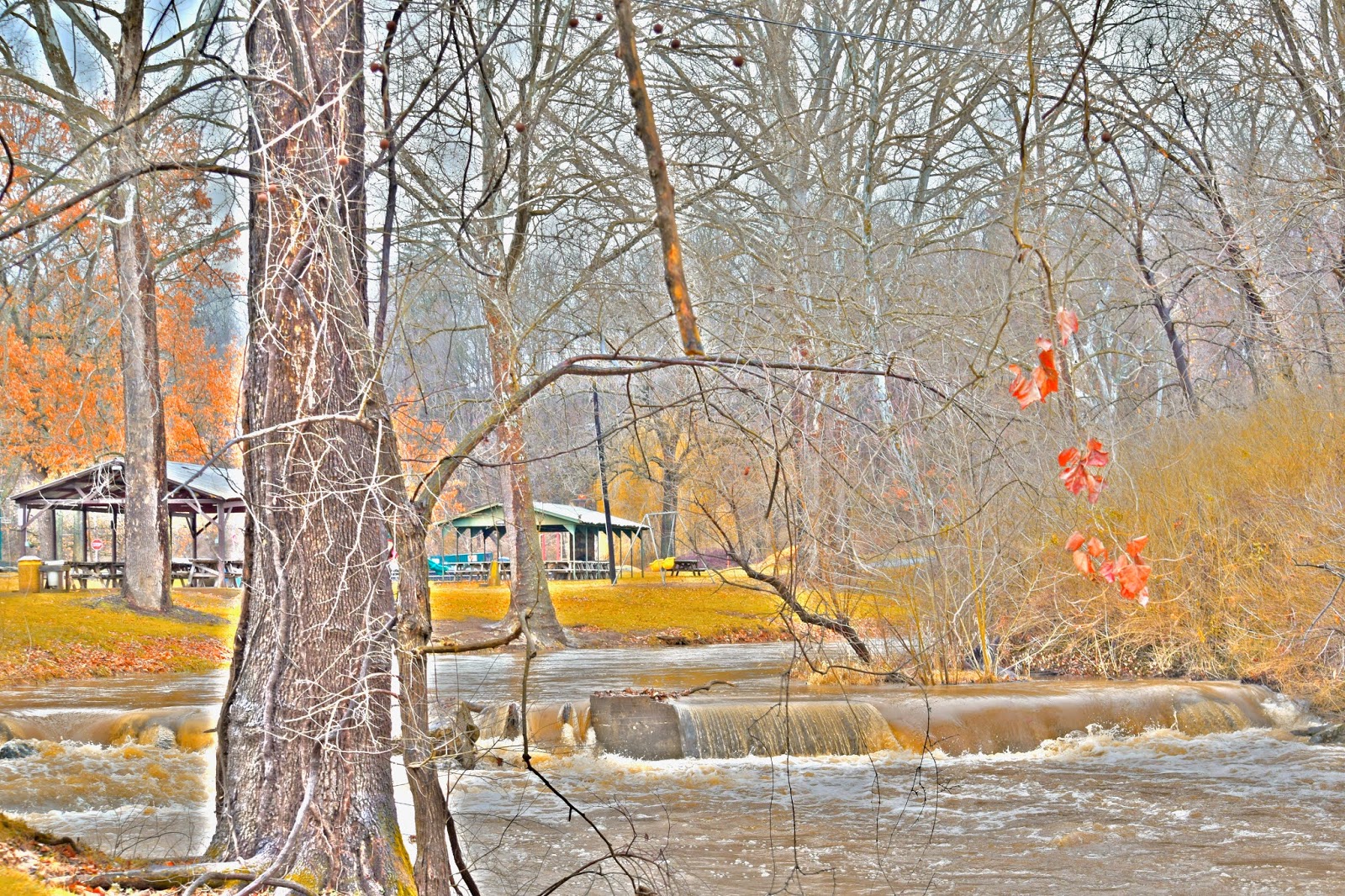
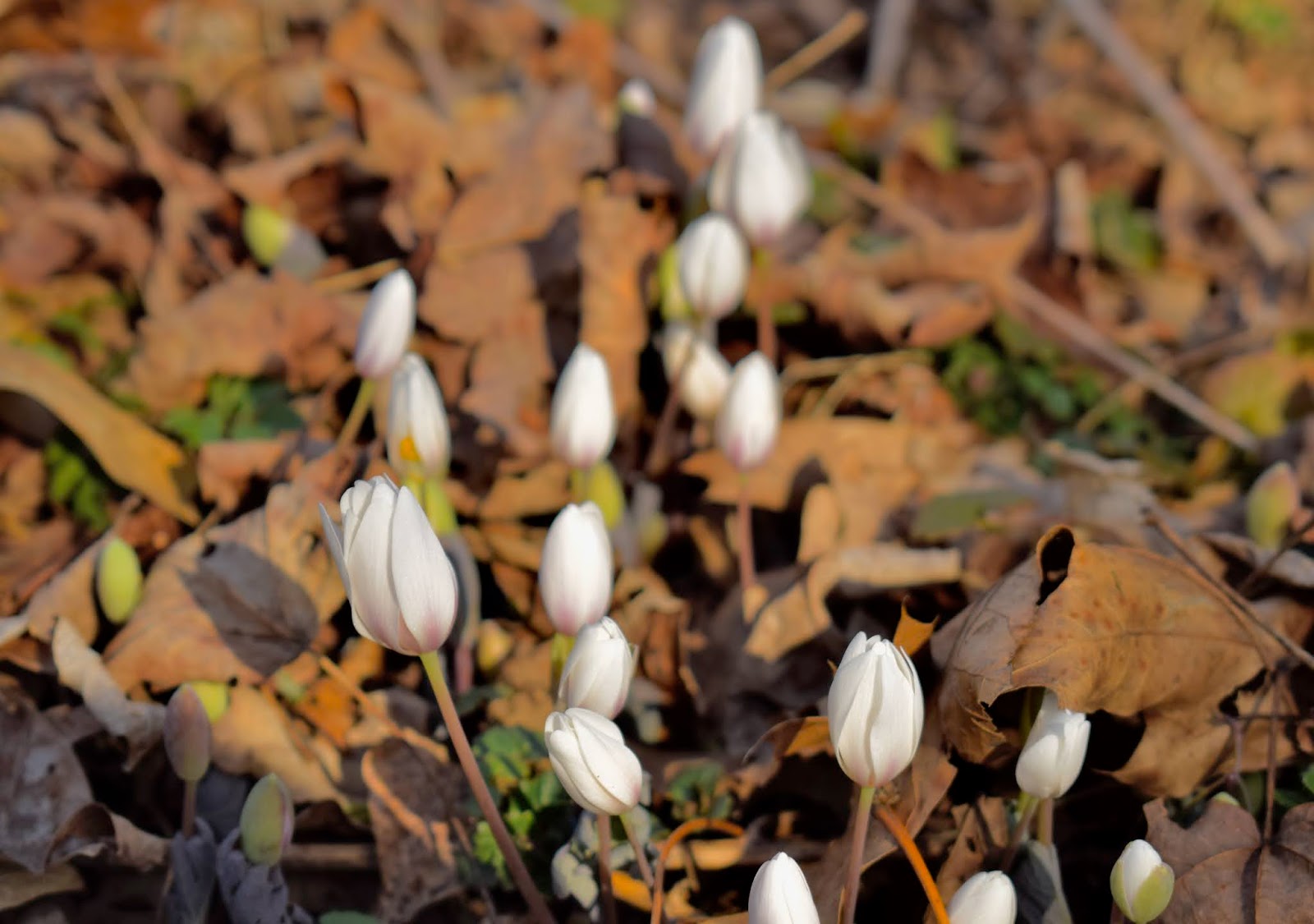
Out here in West Virginia, signs of spring look to be a couple of weeks ahead of the past few years. Bloodroot and forsythia blooms already are bringing their early cheer. 

          Looking back two years these were opening further on into April
Forsythia in sunset, April 1, 2019
Bloodroot in full bloom, April 12, 2018

         We can also anticipate sooner than usual some other markers of special interest. These include the first migrants, especially the towhee, brown thrasher, and hummingbird. 
April 30, 2018
May 1, 2018

 In recent years, it’s been May Day when we’ve welcomed their arrivals, but perhaps for 2020 the red-flowered feeders should be in place by mid-April.


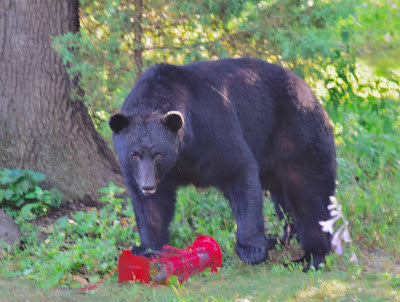
          And that coincides pretty closely with the time to start bringing in the sunflower-seed feeders each night so that the morning doesn’t show them splashed onto the grounds…
special visitor 2019

Friday, March 6, 2020

Continuous Creation


The beauty of dawn models the presence shown in each moment of creation as the evanescent, uncapturable essence spins past too quickly to catch. This morning the luscious red tones first glimpsed had already turned orange -gold in the brief time it took to find and focus the camera—and in the thirty seconds needed to turn the Scene dial to “sunrise,” the spectrum shifted into purple-blues. This might be frustrating but perhaps instead can be tuned to reassurance. As we used to say about the “winter” weather in West Texas: just wait, it’ll change soon enough.
     When I searched my recent documents for “continuous creation,” several treasures showed up. A frequent source on God’s revelation through Nature is Ibn al-Arabi. From William Chittick’s rich commentary:
“The cosmos, made upon God’s form, is His unveiling, and He never repeats the manner in which He shows His Face, for He is infinite and unconstricted. The Divine Vastness forbids repetition. The evanescent and changing nature of existence, or the cosmos as ever-renewed creation and never-repeated divine self-disclosure, is evoked by one of Ibn al’Arabi’s best-known names for the substance of the universe, the ‘Breath of the All-merciful’ (nafas al-rahman).” (p. 19, Sufi Path of Knowledge: Ibn al-‘Arabi’s Metaphysics of Imagination)
     Another reference to Ibn al-Arabi comes from an article by Ralph Austin on a poem of al-Arabi, one evoked by the death of a daughter of his. Line 3 of the poem is translated: “Bound to this moment we are in, caught between the yesterday that has gone and the tomorrow that is yet to come.” Austin comments on this line:
"Again, the sense in Ibn 'Arabi's thought of man's situation – man's being in between two enormous realities: the reality of creation and the reality of eternal essence. As a Sufi master once said, "The past is irretrievable – the future infinitely precious". Here is another state familiar to the Sufis of al-hayrah or perplexity, confusion – being in between two realities, being in a state where one doesn't know where one belongs, where to turn. Ibn 'Arabi is very conscious, in relation to the death of his daughter, of time – the way time cuts us down, the way time changes states, the way time often renders our hopes and ideals to nothing – he is addressing the pressure of the moment. Another Sufi idea suggested here is that of being the person of the moment, Ibn waqtihi. Implicit in this consideration of yesterday and tomorrow is the notion that the present moment is the only real time. The past is gone, the future is not yet here so if we don't enjoy or make full use of the present, then yesterday we will never have again and tomorrow perhaps we won't be here. This is the perplexity of time which is brought home to him by the death of his daughter." (Journal of the Muhyiddin Ibn 'Arabi Society, Vol. VII, 1988.)
     And, while the references could go on and on, here’s one more. From my notes on Lewisohn’s Hafiz and the Religion of Love in Classical Persian Poetry, there are wonderful passages from the chapter by Leili Anvar’s “The Radiance of Epiphany: The Vision of Beauty and Love in Hafiz’s Poem of Pre-Eternity.”
"Utter perplexity is part of the pleasure when reading a Persian ghazal in general, and a ghazal by Hafiz in particular. The apparent disparity of the distiches enhances this feeling of a kind of nuclear aesthetics that lacks unity, giving the deceptive impression that these lines are but ‘orient pearls at random strung.’ [quoting A.J. Arberry] And yet there is unity, but in a very oblique way. In the same way as the primordial vision of beauty and the all-encompassing experience of love constitute the founding metaphysical principles of creation and the secret of the unity of being, aesthetically the same structure presides over the design of the ghazal: it seems complicated to the extreme, upside down, discombobulated, even chaotic like the visible world of multiplicity, but the underlying unifying thread to the paradoxical reality of love and beauty is always there." (p. 133)

Wednesday, March 4, 2020

The Far, the Near & All That’s Between

Near Snake Mountain Range, Nevada, Feb 17
While traveling across the states, a fine companionship came in reading Mingled Waters. An early section tells of “Maya” and its many faces: nature, multiplicity/union, love/desire, and magic.
“Maya is Magic that makes something seem other than it is…Maya is only the means; devotion, gnosis and union are the end… there is hope, as the Bhagavad Gita announces: ‘Composed of Nature’s qualities, My magic is hard to escape; but those who seek refuge in Me cross over this magic.’” (Pir Zia Inayat-Khan, Mingled Waters: Sufism and the Mystical Unity of Religions, pp. 25-27).
        In our journey, we crossed over rivers—Potomac, Ohio, Wabash, Mississippi, Missouri, Gunnison, Colorado, Snake, Columbia, Yakima—and traversed mountain passes—Monarch, Snoqualmie, and many without name. We were breathless in the awe of snowpeaked mountain ranges and in wonder at the rugged yet delicate hues in high desert and canyonland.
Yakima River, WA, Feb 19
Eagle in close-up from tree top in Yakima River photo

   It’s wonderful to imagine the crossing-overs that compose life as the wellspring of moving further in knowing God.
San Rafael Swell, UT, Feb 17 

Saturday, February 29, 2020

Life's an Adventure

Feb 16, near Moab, Utah, looking back at mountains passed
     This adventure, which might be named Life (in “Retirement”), called us to travel cross country the last half of February, not the time of year a sane person would normally choose to traverse the Rockies, Cascades, or even the Alleghenies. However, son Daniel having flown to Seattle months earlier had successfully found employment and consequently was wishing for his car (which he’d packed up and left in our drive). Aware that finding positions in the Northwest, an area favored by many and especially by the IT world, would not be easy, we’d all decided to delay on getting the car there. Now all excited about the new job and realizing this was not a good time for Daniel to take time off, the two retirees decided they’d be able to deliver the car. No great rush getting there and what about trying Amtrak for the return!  O.K. All aboard…
     Now we’re back home. Time to debrief, memory aided by 219 images imported from the main camera along with a few dozen from the cell phone device. 
             But, first, since some friends are asking—a short verdict on Amtrak: 1) great for viewing the landscape, 2) pretty good for photographing (if you can snap quickly and avoid glare on windows), and 3) adequate sleeping accommodations. Would we do it again? Probably, but let’s withhold judgment to allow for recovery time. We are already wondering about taking a trip planned in segments where we could ride the train for a day, get off at an interesting stop to spend the night in a hotel (and then maybe take a day or so visiting the place or something nearby), and then continue on the train for the next segment. 
Meanwhile, we can play with the images from the Seattle trip and share some reflections about travel. What’s the favorite spot between home and there? Moab. An unplanned, unexpected jewel. Due to snowy weather and icy road conditions we scrapped the tentative route that would have skirted Denver to the north then going west through Wyoming. Another option of circling Denver and taking Interstate 70 directly west through the Rockies also looked like trouble due to a new storm promising additional snow and ice. Instead, we settled on a route further south that the incoming storm would miss. This choice would take us to Pueblo, Colorado, and then venture west on Route 50, still taking us through the mountains at Monarch Pass (elevation 11,312 feet)--intimidating but reported as passable. 
        It worked. The only slow-down came on that Sunday morning with a back-up of cars trying to turn into the ski area near Monarch. So we were taking big sighs of relief while rejoining 70 at Grand Junction, and the relief turned into delight as we detoured onto the scenic drive, Highway 128, going south to Moab where we stayed overnight. As Life sometimes offers: not on the plan but available when attentive to the present moment.
Feb 15 along the Colorado River
        Then, early Monday morning, we thrilled with the sunrise 

in Arches National Park taking a couple of hours there 


before returning to Interstate 70 and hours later back on Highway 50 to Ely, Nevada.
One more view from Arches National Park

Thursday, January 30, 2020

The Soul’s Strange Alliance

Photo taken July 2019
So you’re telling me that the “slanderer,” the “blamer,” and the “spy” are relations to treasure? 
“… some commentators have interpreted the slanderer as a guardian angel…”
Really? You’ve got to be kidding! No! Well, maybe it doesn’t mean… how could these be valuable soul mates? 
In one of the Classics of Western Spirituality, Thomas Emil Homerin translates Umar Ibn al-Farid’s “Poem of the Way,” which includes these lines: “My ancient allegiance to you/ led me to see those wicked young slaves you entrusted to me/ as great and guarded treasures” (emphasis mine, from p. 89, Umar Ibn al-Farid. Sufi Verse, Saintly Life. Trans & Intro by Th. Emil Homerin, Paulist Press, 2001). Homerin comments:
“The ‘wicked young slaves’ correspond to the slanderer (washin) and blamer (lahin; laim) found in many Classical Arabic love poems, including those of Ibn al-Farid. Along with the spy, they are among the lover’s protagonists who seek to thwart his goal of union with the beloved; the slanderer denigrates the lover as unworthy of love, while the blamer criticizes him for wasting his time and tries to deceive the lover into believing that the beloved is beneath him. Like the spy, the slanderer and blamer may be read in terms of the lover’s psyche, as the first pushes the lover to further spiritual self-sacrifice, while the latter would pull him down into more selfish sensual pursuits. In addition, some commentators have interpreted the slanderer as a guardian angel, and the deceiving blamer as Satan.” (p. 88; his commentary on p. 74  adds that “In courtly love poetry, the spy guards the beloved.”)
According to this text, the Path to God seems to include a kind of flip by which apparent adversaries become integrated into the more developed soul. If we are each moving closer in a journey toward Unity, such a phenomenal happening would fit. Change, often enough, feels uncomfortable—even when we acknowledge problems with the status quo. 
Upon reflection, we realize how discomfort sometimes signals a better direction. Remember the soreness that marked the aftermath of a long run, that follows a good workout? Also, mental fatigue sometimes accompanies a significant breakthrough, an “ah-ha!” And emotional exhaustion comes in the train of those hard conversations that may be essential in order to ease estrangements.
Peace. Whether inner or outer, family or international, human as well as “all-my-relations,” how much it depends on shifting the boundaries of the “other.” 
This perplexing/amazing transformation from “I/it” to “I/Thou” constructs and opens a much needed window into the spaces that are so hard to see: the soul, spirit, heart, mind, as well as the absolute and eternal ecology in God’s creation.
Getting to Peace looks to be quite a journey. A book on spiritual retreat says: 
“the first theme in your meditation is to think something is trying to transpire behind that which appears. It is not God exactly; but it is what the Sufis call ayat: signs, or clues…God can never be the object of your knowledge, but there are some signs: namely, wherever you see beauty. In your despair, beauty is the clue—if you can see it transpire. And, actually, it is to be seen everywhere; but one has to have the eyes to see it…
A more concrete way of doing this is to see the beauty in the faces of people behind the masks that they are wearing; and even the beauty of your own face looking in the mirror, if you can see what transpires instead of that which appears. Ascribe what you do not like about what you see to the fact that we have had to borrow the fabric of our ancestors, and that we have been subjected to stress and pain and deception. It is true that the outer aspect of our being has suffered from distortion and defilement—but we have to look deeper.” (pp. 37-38 in that which Transpires Behind that which Appears by Pir Vilayat Inayat Khan)
One of the richest resources concerning this ability to “see” and to resolve the estrangement from our soul brother/sister, from the beloved/Beloved must be Martin Buber’s I and Thou.
I contemplate a tree.
I can accept it as a picture: a rigid pillar in a flood of light, or splashes of green traversed by the gentleness of the blue silver ground.…

Buber elaborates on the objective viewing of tree as “other” and then notes the transformational option:
But it can also happen, if will and grace are joined,
that as I contemplate the tree I am drawn into a relation, and the tree ceases to be an It. . . The tree is no impression, no play of my imagination, no aspect of a mood; it confronts me bodily and has to deal with me as I must deal with it—only differently. One should not try to dilute the meaning of the relation: relation is reciprocity.  
Does the tree then have consciousness, similar to our own? I have no experience of that. But thinking that you have brought this off in your own case, must you again divide the indivisible? What I encounter is neither the soul of a tree nor a dryad, but the tree itself. (pp. 57-59, translated by Walter Kaufmann, Scribner’s, 1970
And, then, when this road of true relation is taken far enough, or perhaps when walked at all—we arrive at/in the divine gift of love:
“Jesus’ feeling for the possessed man is different from his feeling for the beloved disciple; but the love is one. Feelings one ‘has’; love occurs. Feelings dwell in man, but man dwells in his love. This is no metaphor but actuality: love does not cling to an I, as if the You were merely its ‘content’ or object; it is between I and You. Whoever does not know this, know this with his being, does not know love, even if he should ascribe to it the feelings that he lives through, experiences, enjoys, and expresses. Love is a cosmic force. For those who stand in it and behold in it, men emerge from their entanglement in busy-ness; and the good and the evil, the clever and the foolish, the beautiful and the ugly, one after another become actual and a You for them; that is, liberated, emerging into a unique confrontation” (p. 66). 


Saturday, January 25, 2020

Guidance through the Candle Flame


These dried-up leaves that cling into winter, now rain-glistened, reflecting the sun breaking through, are memories turned harbinger, breakthroughs into the timeless. They make candles for grey times. They manifest hope--if we have eyes to see it. Let’s look into and through the candle flames.


     After all, “The Clue is Beauty.” This is the title given by Pir Vilayat Inayat Khan to a chapter in that which Transpires Behind that which Appears elaborating on this glance from and toward Beauty:
“. . . your consciousness is a reflection, a projection, of the divine consciousness. So, we thought we got there when we imagined we were an extension of the divine glance—but there is always something beyond it. This is where we move into transcendence, because, of course, we cannot limit God to the divine immanence…   That is why al-Hallaj said How do you think that you can confer upon God a mode of knowing? In one stroke of his transcendental knowledge he can shatter any knowledge that you think you have and replace it with a whiff of his understanding that you can never hold. It will dissolve before you have thought you have experienced it   There is a still deeper experience of God, beyond all that we have been talking about; and that is the divine presence. It is not limited by the qualities; it is not predicated by the qualities. . . the ultimate realization comes when you discover that you are that presence. That is the ultimate secret, and that is a clue to the power… [which leads to success in] the pursuit of excellence…” (pp. 44-45)
   Even a leaf fallen, yet floating still, now in ripples, and


then finding a lacework of ice pattern reminds us of the intricate design making all God’s on-going creation a marvel of beauty. Our fleeting glances into the manifestation of Beauty offer for each one of us a pathway, illuminated moment by moment, step by step, in which we may
“enter into the heart of religion by studying first the phenomena and then deeper and deeper layers of human responses to the Divine until [each one] reaches the innermost sacred core of each religion, the centre, the Numinous, the deus absconditus. . . That is, the highest spiritual experience can be triggered off by a sensual object: a flower, a fragrance a cloud or a person. . . These signs are not only in the ‘horizons’, that is, in the created universe, but also in the human souls that is, in the human capacity to understand and admire; in love and human inquisitiveness; in whatever one may feel, think, and experience. The world is, as it were, an immense book in which those who have eyes to see and ears to hear can recognize God’s signs and thus be guided by their contemplation to the Creator Himself.” Annemarie Schimmel, Deciphering the Signs of God, p. xii.


Monday, January 13, 2020

Layla spark-lets


          Notice
              the little everyday 
                  moments spilling droplets 
              of beauty, 
                  of Beauty. 

                   It’s so easy to 
                       speed past
                            life 
                              slipping by. 

                              Layla steps 
                                   lightly, spark-
                                       lets of light, 
                                             of Light.